Showing posts with label newspaper. Show all posts

Sunday, 9 October 2022

No 228 - Where Newspapers Are On The Political / Economic Spectrum

 SINCE the whole point of this blog is get you reading more newspaper articles about Economics, I thought perhaps it might be useful to write a post about where different UK newspapers would be placed on the policitical / economic spectrum. It's always useful to know the ideological background and possible biases when you read an article.

Here's an illustration I made to try and show this:

As you can see, of both the "serious" broadsheet and the tabloid papers, most are right of centre and more supportive of the free market than government intervention.

The Economist is interesting - it pronounces itself both "liberal"in Politics (which makes it left of centre) and "liberal" in Economics (which makes it more free market than interventionist). This unique perspective is just one the reasons why it so worth reading. Don't forget to sign up for your free subscription if you are a CLC student!

Of all the broadsheets, the Guardian is also the only one whose online articles can be accessed for free, which might explain why I tend to favour them......!



Sunday, 13 March 2011

No 194: Spot of Economics' Economics News

EXCITING news! At great expense, Spot of Economics has started a TV news station......

GoAnimate.com: Economics news 1st march by spottygao

Like it? Create your own at GoAnimate.com. It's free and fun!


Deadly Tsunami Stops Japanese Economy
http://www.guardian.co.uk/world/2011/mar/13/japan-economy-recession-earthquake-tsunami

Report Argues for Big Changes in Public Sector Pensions
http://www.telegraph.co.uk/comment/columnists/alasdair-palmer/8378195/The-pensions-gravy-train-in-the-public-sector-has-to-be-derailed.html

European Union Holds Crisis Meeting Over National Debt
http://www.bbc.co.uk/news/business-12711183

Mervyn King Makes Attack on Banks
http://www.qfinance.com/blogs/ian-fraser/2011/03/07/boe-govenor-mervyn-king-and-the-case-for-reforming-britains-banks

Chinese Inflation Increases Again
http://www.telegraph.co.uk/finance/economics/8375605/Chinas-inflation-rises-to-4.9pc-in-February.html

World Has Most Billionaires Ever, According to New Report
http://www.forbes.com/wealth/billionaires
http://blogs.forbes.com/luisakroll/2011/03/09/the-worlds-billionaires-2011-inside-the-list/

No 193: Internet Buttons - Improved!

SOME of you know that I have used a website called "Internet Buttons" to, well, make some internet buttons leading to websites you need to check out.

To get there, go to www.internetbuttons.org . Then log in with Username: bellerbys / Password: bellerbys

You should then see something like this:


The buttons are colour coded according to the type of site they link to.

BLUE is for Economics and Business News.

GREEN is for Economics Blogs.

YELLOW is for Comment Articles by well-known economics writers. Reading these is now essential for A2 students.

ORANGE is for sites with Economics Revision Materials.

If there is another site you use and like, you can add a button too!

Friday, 11 March 2011

No 192: Some suggested reading from Other Teachers

SOME of the teachers in the Economics Department suggested to me that the following articles would be very useful for you to read.

Firstly Mr Bowen passed on this very interesting interview with Mervyn King, the Governor of the Bank of England. He gives his views on the Credit Crunch, and what he thinks about the current economic situation. He also does not seem to like the Banks much!


Notice the picture of Merv on the left - let me know if you can think of a good title for it!


http://www.telegraph.co.uk/finance/economics/8362959/Mervyn-King-interview-We-prevented-a-Great-Depression...-but-people-have-the-right-to-be-angry.html

Next, Mr Gray has suggested this article written by the Nobel Prize winning economist, Paul Krugman. In it he presents a moderate Keynesian view criticising the effect of austerity measures on economic recovery. It's very readable and very relevant!

As you can see, the person who wrote the title to this picture on the right, doesn't quite agree with Mr Krugman's views...... 

http://www.nytimes.com/2011/03/04/opinion/04krugman.html?_r=2

Friday, 4 March 2011

No 186: Mr Bowen's Weekly Questions (2)

HERE they are, especially useful for micro topics this week.

(Not sure who Green Lung Free Rider is...)


All information is taken from The Daily Telegraph.

I've kept Mr Bowen's original typing style!


1.WHAT IS IPR? 

2. HOW IMPORTANT ARE THE CREATIVE INDUSTRIES IN THE UK AS A PROPRTION OF GDP?

3.WHY DOES JEREMY WARNER THINK THE GOVERNMENT HAS GOT THIS IPR REFORM OF COPYRIGHT LAW COMPLETELY WRONG?

4.WHY DOES THE LEADER ARTICLE THINK THAT THE UK GOVERNMENT HAS BEEN TOO OBLIGING TO NEWS INTERNATIONAL?

5. WHY WAS THE INDUSTRY SECRETARY[THE USUAL MINISTER FOR MERGER REFERRALS] NOT INVOLVED?  DOES THIS MATTER?

6.IN WHAT WAYS WERE THE USUAL PROCEDURES FOR EVALUATING MERGERS COMPLETELY IGNORED.?

  7.WHY DOES THE PROSOED MERGER CAUSE WORRIES FOR OTHER MEDIA GROUPS?

8.WHAT IS PREDATORY PRICING?

9. WHAT IS A PRICE WAR?

10. HOW COULD MURDOCH USE THESE CONCEPTS TO ELIMINATE THE COMPETITION?

11. WHAT IS PRICE FIXING?  HOW DOES IT OPERATE FOR E BOOKS? IS THIS A PROBLEM?


Sunday, 27 February 2011

No 184: Mr Bowen's Weekly Questions (1)

AS you will know if you are in Mr (or Captain?) Bowen's class, he produces a very helpful list of weekly questions relating to those issues you should really be reading and thinking about.

Here is the list for last week. It would be an excellent idea to spend some time testing what you already know, and filling in the gaps in your knowledge if necessary.

  1. Why does inflation pose a great threat to global growth?
  2. Is there anything governments could or should about this threat?
  3. Why does the world economy need "rebalancing"?
  4. What is the PFI? Evaluate its recent performance.
  5. Why has the IMF lowered its growth forecast for the global economy?
  6. Why is the MPC split over the future of UK interest rates?
  7. Argue as a dove then argue as a hawk. Present both arguments and try to resolve them.
  8. "The history of the UK economy since the war seems to indicate that devaluation  and inflation have been the policy options that have been mostly unsuccessful. Yet we seem to be doing the same." Comment on this view.
  9. What is causing the current high level of inflation?
To these questions I would add one more:

    10. What is happening with Barclays Bank's profits and UK tax payments?

Wednesday, 5 January 2011

No 173: Top 10 Economics Stories of 2010


CLICK on this link to get to a sideshow from the "Daily Telegraph" of its top 10 economics new stories of 2010.

Here is a list of which stories they have included:


1. Deficit, debt and austerity worries
2. Government debt problems for European countries
3. Currency wars
4. Global imbalances in trade
5. China's continued growth
6. Difficulties with job creation
7. Inflation and interest rate decsisions
8. Problems for the Bank of England's monetary policy
9. The formation of the Office for Budget Responsibility
10. Unpredictable UK growth

These stories will be the starting point of our classes on Macroeconomics this coming term (5 more days of holidays - use them wisely and enjoy - I myself am mostly watching cricket!).

Therefore, please make sure you have a look. There may even be an exciting quiz about them next week.....


If you want more, here is a link to the Telegraph's Top 10 Banking Stories of 2010.


And if you'd like even more, this is a link to "The Week" magazine's Most Newsworthy Dogs of 2010, including the sad story of Target, the war hero dog :,(


Monday, 6 December 2010

No 164: First Four Student Stories

SO HERE are the first of the summaries written by my A2 students about recent economic stories. Good work everyone!

EUROPEAN COUNTRIES AND THE EURO by Queena Wong

Countries in Europe like Spain, Italy, Portugal and Ireland are still in recession. Confidence in these countries decreased as the cost of insuring government debts rose sharply. The cost of insuring indicates the high risks of government repayments. This has led to the Euro falling to a 10-week low.


(See

   
IS HAPPINESS ALL ABOUT MONEY? by Yana Geshko


In the article ideas about human well-being and income are discussed. Should government put people's happiness above people's prosperity as the aim that drives their policy- making decisions? Though peoples' answers don't show that money is everything, they usually make a decision relying on the possibility to save or earn money. 


(See http://www.economist.com/node/17578888 )


CAMERON'S HAPPINESS INDEX by Iris


David Cameron has asked the Office of National Statistics to measure the country's "general well-being" in terms of what is known as the index of happiness. The government is intending to use this statistical information when it comes to policy making.However,this rather creative new strategy is not favoured by the majority of people who is concerned about the feasibility of this,because it is not only difficult to define "happiness",but is also time-consuming to collect data from a large and representative sample.


 CADBURY AGREES TO KRAFT'S TAKEOVER BID by Rachel Yoo

Cadbury will benefit from the supply chain of a larger company.
For example, its addition to the Kraft will allow the combined company to have an even a broader reach around the world.
Also, there is a big chance to generate cost savings.
However as Cadbury, the 186-year-old British company, was acquired by an American company there were public protests, asking to “Keep Cadbury British”.

 http://stocks.investopedia.com/stock-analysis/2010/What-Happens-When-Kraft-And-Cadbury-Merge-KFT-CBY-WEN-MCD-TGT0127.aspx?partner=tickerspy


Wednesday, 10 November 2010

No 157: Newspaper questions for Wednesday 10 November


Page 6 - "Train fare rises being used to ease peak-time congestion"
Do you think the rises in fares will ease peak-time congestion on trains?

Page 11 - "Move to Biofuels Will Add Carbon"
Biofuels have been praised as providing a solution to the use of petrol. Does it seem to be a good solution?


Page 41: "Forecasters predict oil will reach $200 a barrel"
Why?

Page 42: "Gold hits record high of $1,420 per ounce"
Why?

Page 42: "Trade deficit narrows slightly"
Why?


Tuesday, 9 November 2010

No 156: Newspaper Stories for Tuesday 9th November


PAGE 10: "Cameron Enlists Fashion Leaders to Court Chinese"
Why does the British government hope 'China rebalances its economy' by raising workers' wages?


Page 18: "Smokers Not Quitting"
What does the article suggest is a more important influence on smokers than the price of cigarettes?

Page 19: "Web Giants at Loggerheads Over Sharing Users' Data"
Do you think it would be better for Facebook and Google to cooperate or compete?


Page 43: "Sky Gives a Hint of Its Power"
Give an argument in favour of the UK government stopping News Corp taking over the rest of BSkyB.


Page 45: "Britain Avoids Double Dip, Says OECD"
What does the OECD think will happen to the UK economy?

Monday, 8 November 2010

No 155: Newspaper questions for Monday 8th November

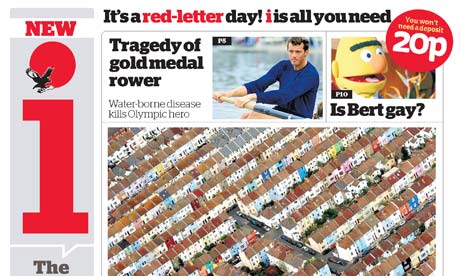
FOR anyone outside my A2 classes, every Monday, Tuesday and Wednesday we have been reading stories from the new 20p "i" newspaper.


(Here is a BBC news report about the paper if you are interested.)

Here are the stories and questions for today:

Page 3: "Internet Biggest Browers (Diagram)"
What do the diagrams suggest about the market structure for internet browsers?

Page 4: "Channel 4 Reporter Exposes British Sweatshops Supplying Big Retailers"
Make an argument in favour of British companies using sweatshops such as these.

Page 4: "Archbishop Warns on Jobless Plan"
Do you support the government's idea of unpaid manual labour for the long-term unemployed?

Page 41: "Falling House Prices Tempt First-Timers"
Are falling house prices good or bad for the economy?